
The Acceleration of Portfolio Pruning
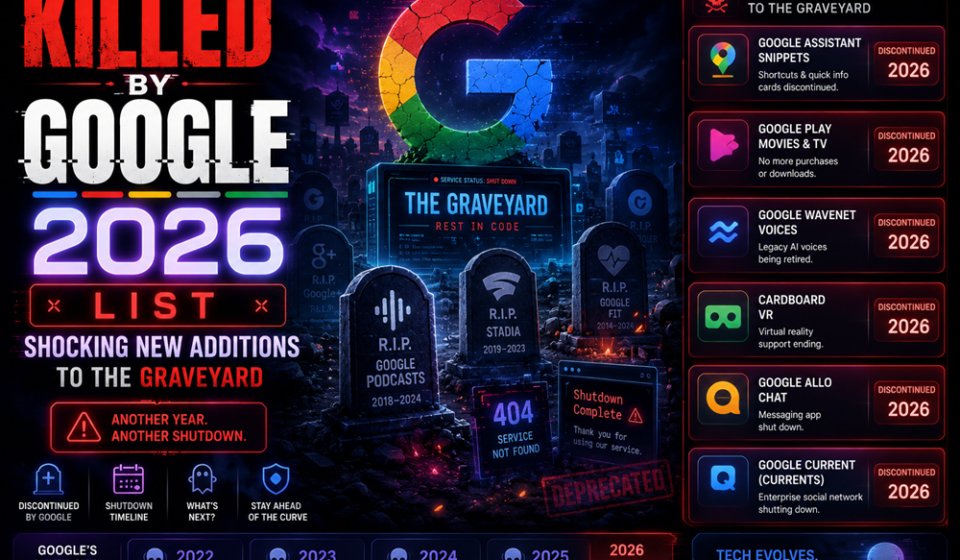
The speed of corporate product consolidation has broken past historical records. As documented continuously by developers around the world, monitoring the expanding Killed by Google 2026 list has transitioned into an essential survival habit for systems administrators, developers, and project managers. Google builds software with unparalleled velocity, but it cuts down lagging projects with calculated ruthlessness.
By analyzing the newer entries joining the Killed by Google 2026 list, a clear corporate thesis emerges. The organization is systematically shutting down standalone utilities, underperforming enterprise developer portals, and experimental gaming frameworks. These computing resources are being directly repurposed to fuel cloud-native infrastructure and large language models.
Whether your dev teams are scrambling to adjust a repository pipeline or your business is mapping a multi-year migration plan, adapting to these product changes is critical to future-proofing your technical stack.
The Problem: High Workflow Disruption for Power Users
Sudden application terminations create massive friction for integrated teams. In the past, finding out that a service was shutting down meant dealing with confusing warning banners, messy data exports, and tight relocation deadlines. When a custom tracking database or internal developer tool goes dark, companies face unexpected engineering costs as they race to rewrite deep integrations from scratch before servers go offline permanently.
The sudden expansion of the Killed by Google 2026 list directly highlights this operational transition gap. For corporate engineering teams or everyday cloud users who built their habits around specialized project management platforms or niche scanning tools, these sunsets require swift action. Finding an alternative home for your proprietary datasets is a high-priority task that must be completed before final platform access is revoked.
Deep Dive: The 5 Most Shocking Additions to the Graveyard
To keep your active business environment completely secure, you must track exactly which software platforms have crossed into the sunset archive. The following five high-profile entries have officially been moved onto the structural Killed by Google 2026 list:
| Discontinued Platform | Original Operational Intention | Active Life Cycle | Core Reason for inclusion on the Killed by Google 2026 List |
| 1. Google Tables | Collaborative automation database tool born from Area 120. | 2020 – 2026 | Broad consolidation within Workspace, forcing users over to alternative AppSheet setups. |
| 2. Steam for Chromebook | Alpha initiative built to test high-end local gaming on ChromeOS. | 2022 – 2026 | Strategic shift of system assets away from complex local gaming frameworks toward cloud runtimes. |
| 3. Dark Web Reports | Personal data breach notification and identity scanning tool. | 2023 – 2026 | Feature absorption, moving tools straight into the native “Results About You” account dashboard. |
| 4. Project Conformance | Developer validation suite built to audit API layout contracts. | 2024 – 2026 | Replaced by automated validation tools native to the Gemini Enterprise Agent Platform. |
| 5. Google Stack | Smart document scanner and PDF organization utility. | 2021 – 2026 | Complete retirement of the application, driving document tracking tools into Google Drive. |
By tracking how these software assets are shut down or rolled into larger portfolios, developers can better predict future changes on the Killed by Google 2026 list.
Step-by-Step Guide: How to Export Your Assets Safely via Takeout
Ready to safeguard your custom business records, verify your account credentials, and pull your operational files down before the final server wipe? Follow this exact walkthrough sequence to extract your data pools securely.
1.Access the Centralized Google Takeout Management Center:Console Audit.
Open your secure corporate browser window. Navigate straight to the primary export dashboard located at takeout.google.com and log in with your administrative account profile.
2.Isolate and Filter for the Targeted Sunset Applications:Step 2.
Do not click the export button blindly to pull down your entire cloud drive history. Click the Deselect All button, then scroll down to manually check the boxes matching the newer entries on the Killed by Google 2026 list.
3.Select Highly Accessible Database File Formats:Step 3.
Click the advanced options dropdown menu to select your data schema layout. Choose universally accessible, open-standard file configurations—such as .json or .csv files—to ensure simple importing into replacement apps.
4.Configure Delivery Pipelines and Trigger the Cloud Archive Export:Step 4.
Select your preferred archive packaging location. Choose Send download link via email and click create export to allow the background servers to bundle your datasets efficiently.
5.Download the Packed Archive and Validate Schema Integrity:Step 5.
Open the generated download links once your email alerts arrive. Pull down the raw zip folders onto your local environment and run a test import inside your new platform to confirm zero data loss occurred.
Expert Enterprise Secrets for Managing Application Lifecycles
- Build Systems Agnostically Using Open Frameworks: When drafting software architectures or structuring data tables, do not rely on niche, vendor-locked toolsets. Use standard SQL formatting or open-source database layouts so your code remains easy to move if a platform hits the Killed by Google 2026 list.
- Audit Third-Party Software Dependencies Regularly: Keep an explicit map of your external API hookups. Use automated command-line auditing scripts inside your continuous deployment setups to scan for and flag deprecated cloud libraries early.
- Consolidate Team Projects into Unified Workspace Hubs: When moving away from retired database structures like Tables, utilize AppSheet or macro-enabled Sheets to centralize your logic blocks without introducing expensive external software overhead.
Common Migration Pitfalls to Avoid
- Relying on Automatic Data Migration Paths: Assuming your custom configurations will automatically move to a replacement app can result in catastrophic data losses. Always execute a manual backup run through Google Takeout before the official final service date hits.
- Hardcoding Critical Infrastructure to Beta Tools: Building core business pipelines on temporary experimental features from Google Labs introduces high risk. Limit your production-level code strictly to stable core services.
- Leaving Inactive Tracking Webhooks Live in Production Code: Forgetting to clear away connection loops tied to products on the Killed by Google 2026 list can trigger system timeout errors. Clean your active repository code blocks regularly to keep your systems running at peak performance.
Pros and Cons of Google’s Aggressive Consolidation Strategy
Pros
- Optimized Compute Allocation: Freeing up server clusters from aging applications lets Google route maximum processing power into advanced AI hypercomputers.
- Simplified Core User Interface: Eliminates software clutter across the commercial dashboard by rolling overlapping apps into single, powerful platforms like Drive.
- Rapid Innovation Capabilities: Shifting focus away from stagnant projects allows development teams to prototype and ship cutting-edge cloud features.
Cons
- Erosion of Long-Term Professional Trust: Frequent, un-predicted software closures can cause enterprise IT decision-makers to hesitate before adopting new developer tools.
- Heavy Readjustment Costs for Engineering Teams: Forcing developers to routinely rewrite application integration layers pulls focus away from core product innovation roadmaps.
Strategic Real-World Transition Use Cases
- Flawless Enterprise Database Relocations: Forward-thinking systems administration groups track incoming application changes closely, smoothly migrating their tracking sheets out of Tables and into automated AppSheet pipelines with zero downtime.
- Seamless Corporate Identity Audit Conversions: Modern data security squads adjust to platform deprecations instantly, replacing standalone breach alerts by moving users over to the native, unified security tools inside the primary account console.
- Agile Code Validation Framework Upgrades: High-volume software houses intercept system changes early, moving their testing rules away from old validation blocks and onto the automated frameworks inside the Gemini Enterprise Agent Platform.
Ecosystem Adjustments Summary & Tactical Next Steps
Analyzing the corporate decisions behind the current Killed by Google 2026 list highlights a permanent technical reality: managing cloud-native software requires architectural agility. By prioritizing open software standards, performing routine code audits, and running timely data backups via Google Takeout, you protect your digital assets from sudden platform closures. Start your protective cleanup today by mapping out your active cloud dependencies, backing up your oldest system tables, and shifting your code pipelines to core long-term services to secure your digital workflow.
Explore More Google Products & Tools
To see how these new high-speed models fit into Google’s broader software roadmap, check out our comprehensive Google Product Index Categories Hub on the homepage to browse through active enterprise toolsets.
Google Product Index Categories Hub:
https://www.google.com/search?q=https://gproductindex.com/
To track how these new tools fit into the wider landscape of active and legacy applications, you can explore our comprehensive Google Products Database Hub right on our homepage.
Google Products Database Hub:
10. FAQ Schema
Why are so many notable platforms added to the Killed by Google 2026 list?
Google manages its global software portfolio using an objective, data-backed lifecycle strategy. Services join the permanent Killed by Google 2026 list when they experience low market adoption, duplicate features found in core applications, or when internal corporate focuses shift toward higher-priority technologies like agentic cloud frameworks.
How much notice does Google provide before a service is permanently shut down?
While warning timelines vary based on user base scale, Google generally gives a solid heads-up window of 3 to 12 months before pulling the plug on server support. This notice gives system engineers and users plenty of time to run comprehensive data exports.
Can developers still access the APIs of a service once it joins the Killed by Google 2026 list?
No. Once a product reaches its final shutdown date, background hosting servers are permanently turned off. All related external endpoints and connection webhooks will return connection errors, making it vital to swap out deprecated code blocks early.